
Now Reading: Anthony Albanese Faces a New Test at Home and Abroad
-
01
Anthony Albanese Faces a New Test at Home and Abroad

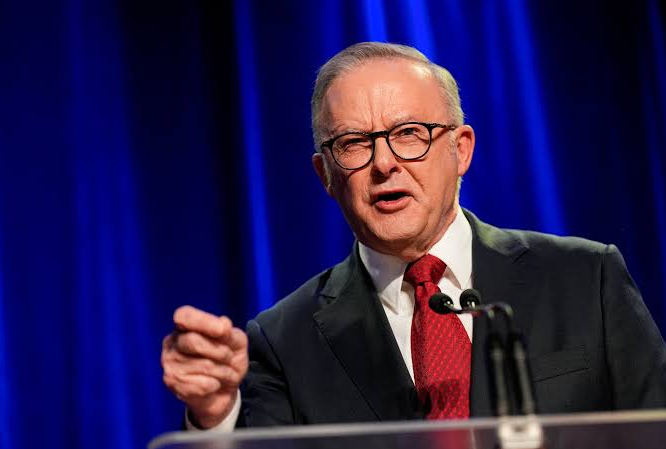
Anthony Albanese has entered one of the most demanding periods of his leadership. Australia’s prime minister is attempting to increase the country’s international influence while facing growing domestic frustration over living costs, housing, migration and economic uncertainty.
In September 2026, Albanese announced that Australia would seek a non-permanent seat on the United Nations Security Council for the 2029–2030 term. The campaign will place Australia in competition for one of two positions allocated to the Western European and Others Group.
Australia last completed a term on the council in 2014. Returning would give Canberra a stronger voice in debates involving international security, sanctions, peacekeeping and conflicts with direct consequences for the Indo-Pacific region.
Albanese presented the campaign as evidence that Australia has the experience and diplomatic relationships required to influence global events. He identified climate change and artificial intelligence as issues that increasingly belong inside international security discussions.
Support from Pacific island nations and Southeast Asian partners will be important. Australia frequently describes itself as part of the Pacific family, but that relationship has sometimes been tested by disagreements over climate policy, development priorities and regional competition with China.
A successful Security Council campaign would therefore require more than support from traditional Western allies. Canberra would need to demonstrate that it listens to smaller countries and understands the security threats they consider most urgent.
The international initiative comes at a difficult political moment at home. Recent polling has shown declining satisfaction with Albanese and weaker primary support for the Labor Party. Cost-of-living pressure—including fuel, housing and borrowing costs—has created frustration among voters who do not feel that broader economic progress has improved their daily lives.
This creates a familiar challenge for national leaders. Diplomatic achievements can strengthen a country’s international position, but voters normally judge a government through more immediate questions: Can they afford rent? Are mortgage payments rising? Is fuel becoming more expensive? Can their children buy a home?
Albanese has argued that his government is pursuing structural rather than temporary solutions. Its programme has included wage policies, energy investment, assistance for homebuyers and changes intended to reduce financial pressure.
Housing remains particularly difficult. Increasing support for buyers can help families enter the market, but it may also raise demand without creating enough new homes. Faster construction requires cooperation between federal, state and local governments, as well as infrastructure and skilled labour.
Migration is another source of pressure. Australia depends on migration for workforce growth, universities and long-term demographic stability. At the same time, rapid population growth can intensify housing shortages and increase pressure on public services.
The government’s 2026 Intergenerational Report underlined the long-term importance of the issue. Australia’s population is ageing, fertility is expected to remain low and the number of people over 85 is projected to increase substantially. Migration will therefore remain economically important even as it becomes politically controversial.
Albanese must explain that contradiction clearly. Australia may need migrants over the long term while also needing better control, planning and infrastructure in the present.
His political problem is made more complicated by the rise of parties outside the traditional Labor–Coalition competition. Pauline Hanson’s One Nation has attracted voters dissatisfied with migration levels, living costs and established political institutions.
Albanese cannot respond to that challenge only through criticism of One Nation. He must demonstrate that the government recognises the real economic concerns driving voters toward populist alternatives.
The next stage of his leadership will therefore depend on balance. Internationally, he wants Australia to act as an influential middle power capable of shaping global rules. Domestically, he must convince voters that his government remains focused on prices, housing and economic security.
Australia’s Security Council campaign is an ambitious project, but Albanese’s most difficult audience remains at home. His success will be determined by whether international leadership can be matched by visible improvements in everyday Australian life.
Sources: Reuters — Australia to seek a UN Security Council seat, ABC — Anthony Albanese interview and political discussion